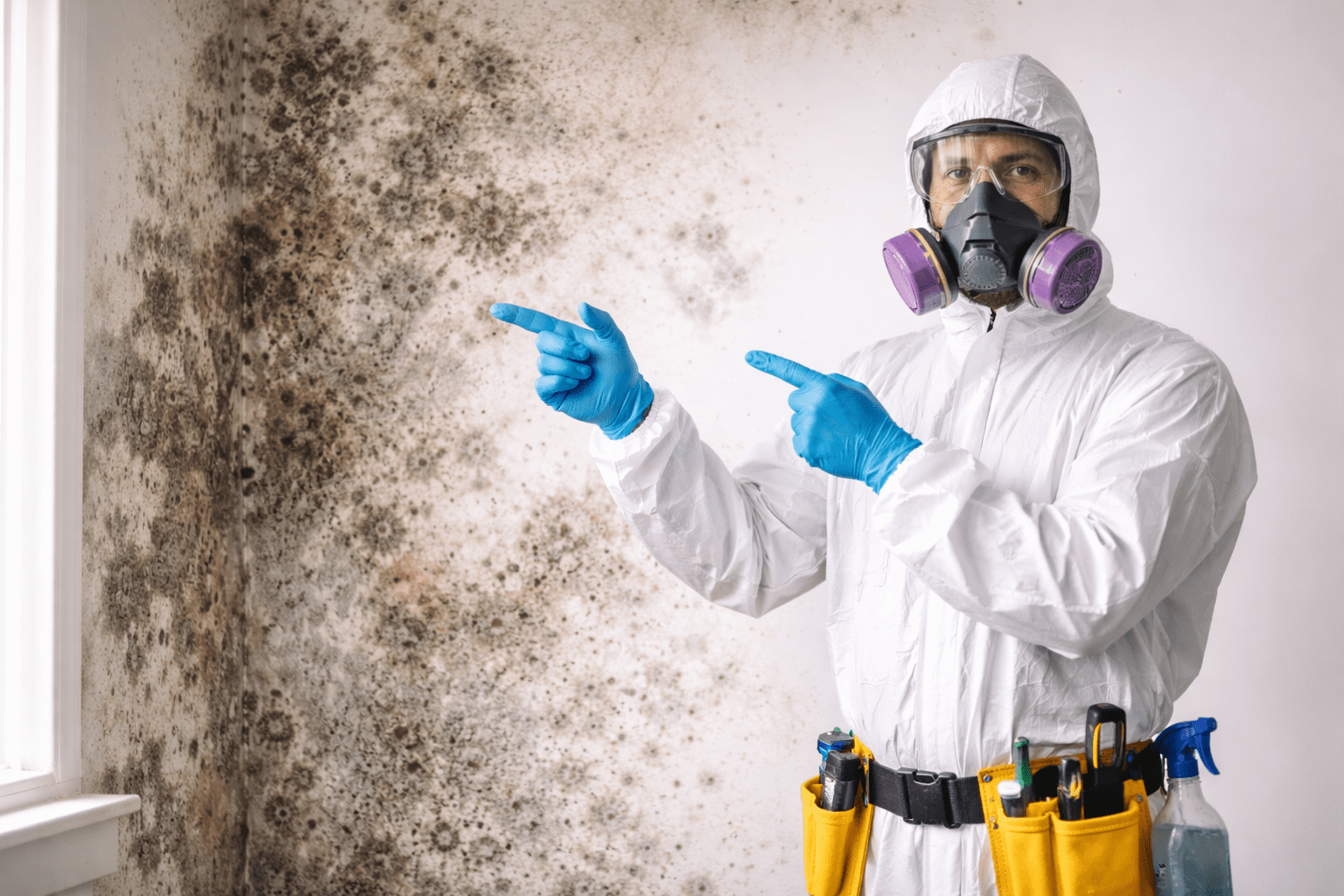
Ask the Experts: Common Mold Myths Debunked by Professionals
Mold is one of the most misunderstood problems in a home. Some “tips” spread online sound helpful, but they often miss what professionals focus on: moisture control, proper cleaning methods, and not spreading spores while you work. Below are the most common myths experts hear—and the facts that actually protect your home and health.
Quick Takeaway: Mold Isn’t Random — It’s a Moisture Signal
Most mold advice fails because it treats mold like a stain instead of a moisture-driven growth problem. The expert approach is consistent: fix the moisture source, clean safely without spreading spores, and verify the area is dry enough to prevent regrowth.
- Moisture control matters more than the cleaning product
- Porous materials behave differently than tile or metal
- Hidden mold is common behind walls and under floors
- Cover-ups (paint, caulk) rarely solve the root cause
Why Mold Myths Spread
Mold advice often gets oversimplified into one-liners: “Just bleach it,” “Paint over it,” or “Only dirty homes get mold.” The reality is more practical (and less dramatic): mold needs moisture and time. If you remove moisture and clean correctly for the surface type, you usually win. If you only treat what you see, mold often returns.
Expert mindset
Mold is rarely the primary problem. It’s a symptom that moisture is lingering somewhere it shouldn’t. That’s why professionals start with source control and containment—not a spray bottle.
Myths vs Facts (Debunked by Professionals)
Myth: Bleach kills mold completely
Fact: Bleach may lighten or remove visible staining, but it’s not a universal solution—especially on porous surfaces (drywall, wood, carpet). Porous materials can hold mold deeper than the surface, and the “roots” can remain even when the top layer looks clean.
What pros do instead: Match the approach to the material. Non-porous surfaces can often be cleaned effectively. Porous or semi-porous materials may require deeper cleaning, sanding, HEPA vacuuming, or replacement if growth is extensive.
Myth: Mold only happens in old or dirty homes
Fact: Mold can grow in any building—new or old—if moisture is present. A brand-new home with a roof leak, plumbing defect, wet building materials, or poor ventilation can develop mold quickly.
What pros watch: humidity, ventilation performance, leak history, condensation points, and how fast materials dry after water events.
Myth: All “black mold” is toxic
Fact: Many molds can appear dark or “black.” Only lab testing can confirm the species. Some molds are known for producing mycotoxins, but color alone is not a diagnosis.
What pros recommend: treat any unknown mold seriously, focus on moisture control and safe removal, and use testing when documentation or health sensitivity makes it important.
Myth: If you can’t see mold, it isn’t there
Fact: Hidden mold is common—behind walls, under flooring, inside cabinets, in attics and crawlspaces, and around HVAC components. Musty odor, recurring allergy-like symptoms indoors, or repeated condensation can be clues.
What pros do: moisture mapping, targeted inspection of risk zones, and careful evaluation of the leak path (where water traveled, not just where it pooled).
Myth: Mold exposure only causes respiratory problems
Fact: Respiratory symptoms are common, but people also report irritation of eyes and skin, headaches, fatigue, or worsened allergies. Sensitivity varies by individual and by exposure conditions.
Expert advice: if symptoms improve when you leave the building and return when you come back, investigate indoor moisture and air quality rather than assuming it’s “just seasonal.”
Myth: You can remove mold by simply wiping it away
Fact: Wiping can smear spores and leave growth behind—especially on porous materials. If you disturb mold without containment, you can also spread spores into nearby rooms.
What works better: controlled cleaning with the right product for the surface, mechanical removal (scrubbing/HEPA vacuuming), and complete drying so regrowth conditions disappear.
Myth: Mold won’t grow in dry climates
Fact: Mold doesn’t care about the regional climate as much as indoor moisture. Even in dry areas, bathrooms, kitchens, basements, HVAC condensation, and plumbing leaks can create the exact damp conditions mold needs.
Pro tip: “Dry climate” often leads to fewer dehumidifiers, but localized moisture problems still happen. Watch condensation and ventilation closely.
Myth: Painting over mold solves the problem
Fact: Paint is a cover-up, not a cure. If moisture remains, mold can continue growing underneath. Over time, you may see bubbling, peeling, staining, or odor returning.
What pros do: remove the mold first, fix the moisture issue, dry completely, and only then apply appropriate coatings (often mold-resistant products in high-moisture areas).
The “Safe Basics” Professionals Follow
If you remember one thing from every myth above, make it this: moisture control + safe removal beats “miracle products” every time. Here are the fundamentals most reputable remediation teams follow:
-
Find and fix the moisture source
Leaks, condensation, humidity, and ventilation failures must be corrected or mold often returns.
-
Contain the area when disturbance is likely
Containment reduces cross-contamination and keeps spores from traveling room-to-room.
-
Remove or clean based on surface type
Non-porous materials often clean well. Porous materials may need deeper removal or replacement.
-
Dry thoroughly and verify
Drying is prevention. If materials remain damp internally, mold can regrow even after cleaning.
Bottom line
Mold isn’t a “one-product” problem. When you fix the moisture and clean correctly for the surface, you get lasting results—not temporary cosmetic fixes.
When Professional Help Is the Smart Move
Some situations require more than DIY cleaning—not because homeowners can’t work hard, but because hidden moisture, large affected areas, or health sensitivity raises the stakes.
- Mold returns repeatedly (a strong sign the moisture source persists)
- You smell mustiness but can’t find visible growth
- Growth is inside walls, ceilings, HVAC systems, attics, or crawlspaces
- Anyone in the home has asthma, severe allergies, or immune compromise
- There was a flood, sewage backup, or long-term leak
Not Sure What You’re Looking At?
An inspection can identify the moisture source, map hidden dampness, and recommend the safest path forward— whether that’s a targeted DIY plan or professional remediation.
Frequently Asked Questions
What’s the most reliable way to prevent mold?
Keep moisture under control: fix leaks fast, reduce indoor humidity, ventilate bathrooms/kitchens, and dry water-damaged materials thoroughly. Prevention is moisture management.
Should I test mold before removing it?
Testing can be useful for documentation, sensitive health situations, or uncertain sources. But regardless of species, visible mold and moisture problems still require proper removal and prevention steps.
Is it safe to stay in a home with mold?
Sensitivity varies. If symptoms worsen indoors, if mold is extensive, or if vulnerable individuals are present, get professional guidance. Reducing exposure while fixing moisture and removing mold is often recommended.